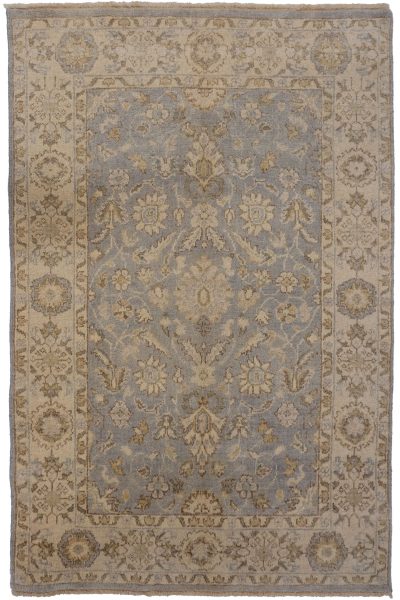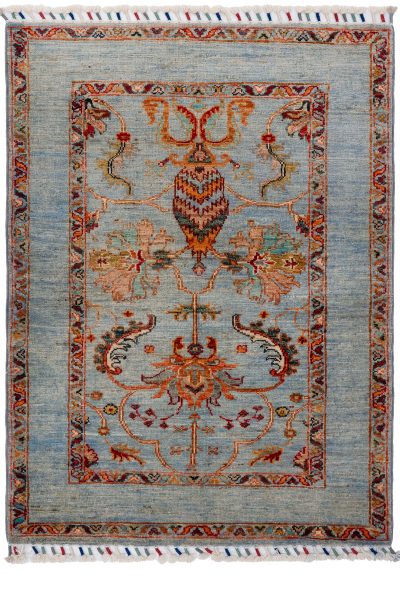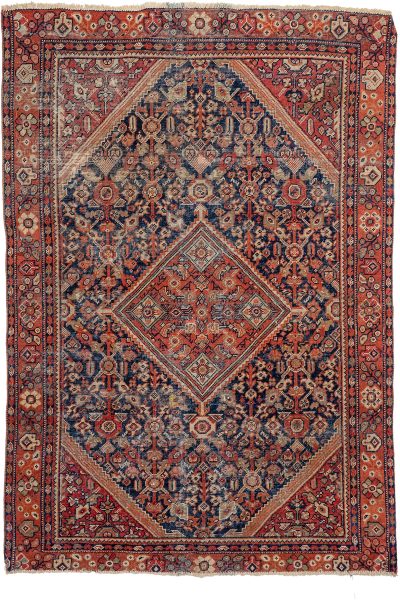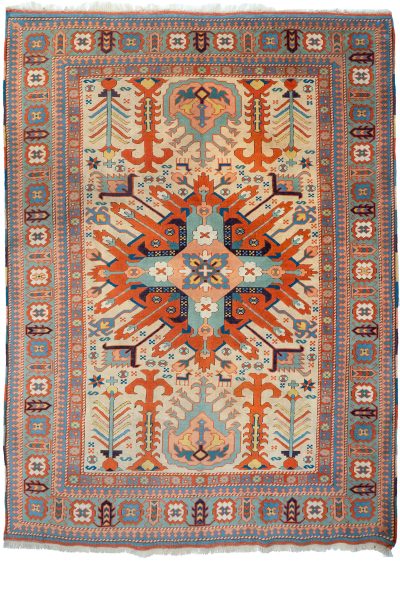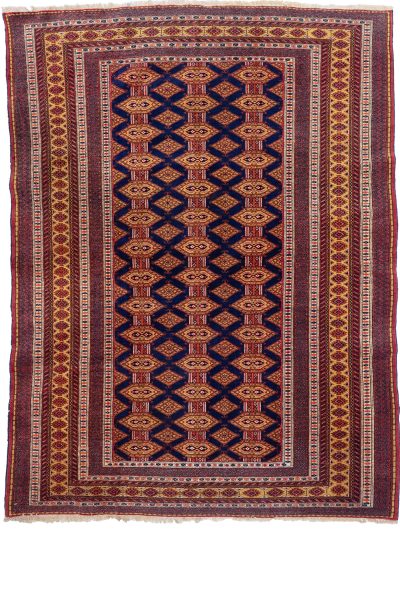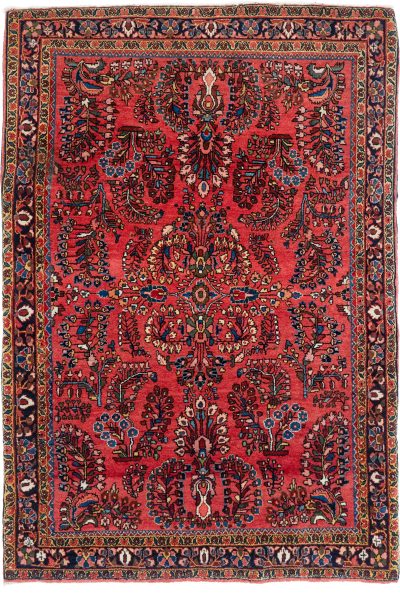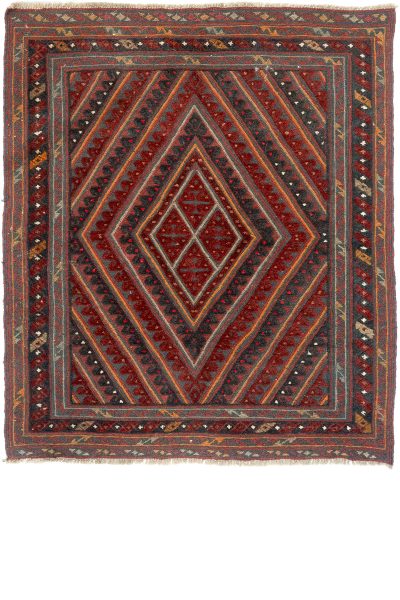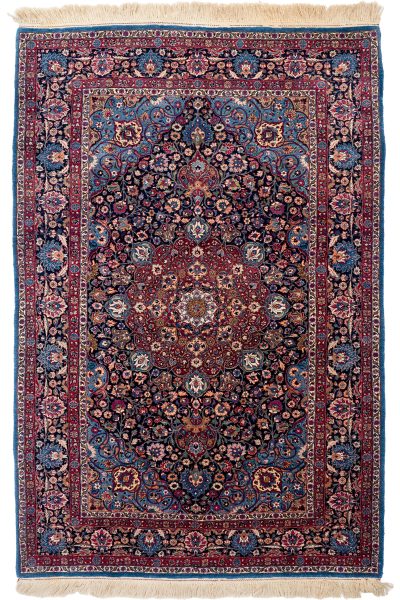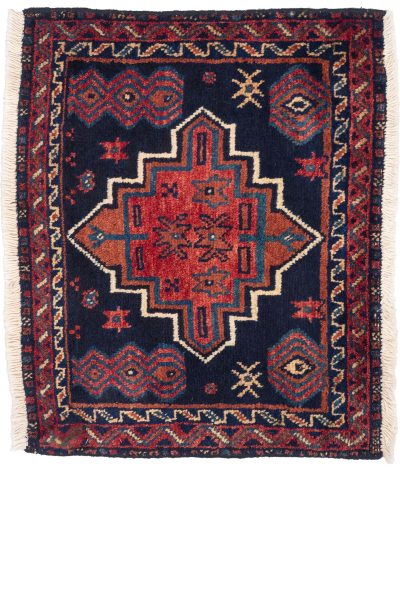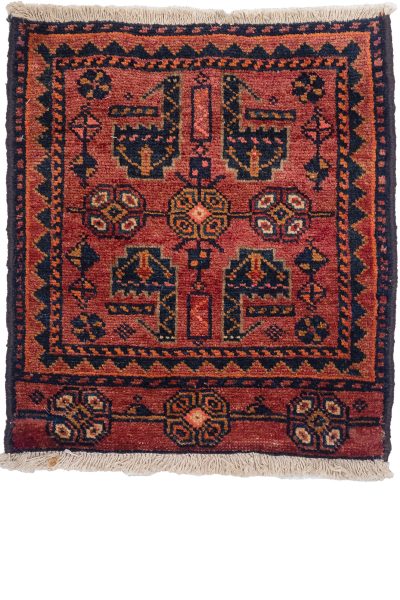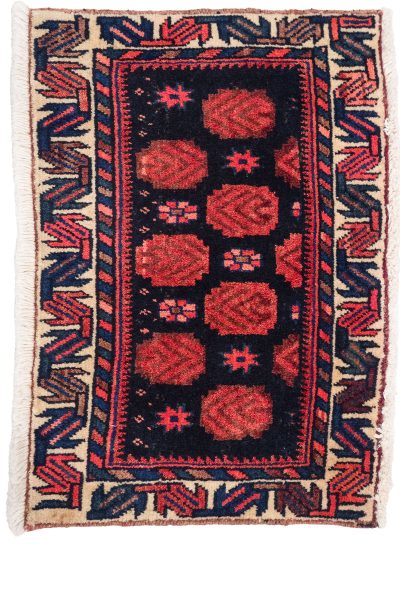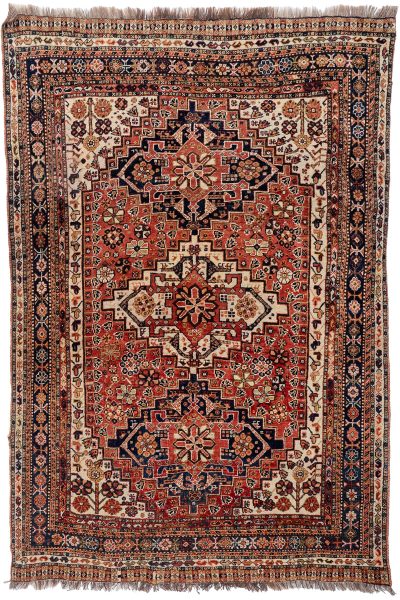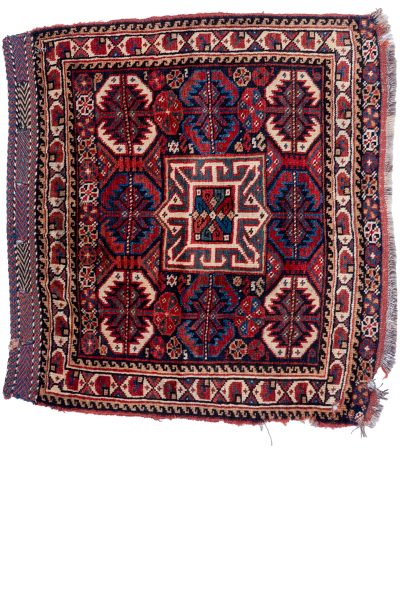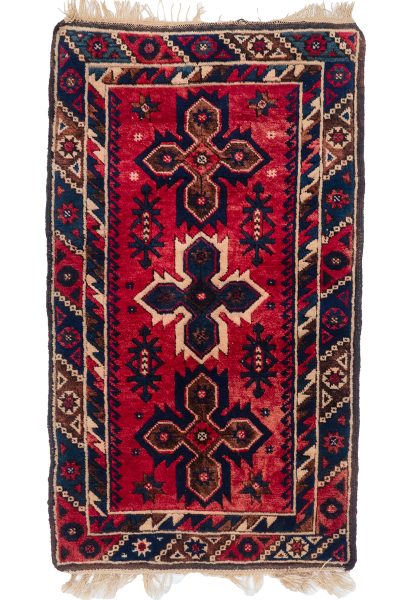
These colourful carpets and rugs are hand-woven in Fars province of south-west West Asia and are brought to market in the Capital city of Shiraz, near the ancient city of Persepolis. The Qashqa'i tribes, now largely settled, who weave these beautiful rugs are particularly well known for their use of vibrant colours, achieved through high quality, hand spun and often natural dyed yarns. The designs are well executed showing Caucasian influence, with the "chain medallions" frequently encountered, along with combs, stylised birds and animals. They are woven on a horizontal ground loom, with a foundation of ivory woollen warps and characteristically red dyed wefts, having edges over wrapped in different coloured yarns producing an attractive barber's pole effect.
The Qashqai tribes who weave these beautiful rugs are particularly well known for their use of vibrant colours, achieved through high quality, hand spun and often natural dyed yarns. The designs are well executed showing Caucasian influence, with the "chain medallions" frequently encountered, along with combs, stylised birds and animals. They are woven on a horizontal ground loom, with a foundation of ivory woollen warps and characteristically red dyed wefts, having edges over wrapped in different coloured yarns.
Fine Serapi Rug is a small village near to Heriz in the Azerbaijan area of Northwest West Asia, one of the most prolific weaving areas. Qarajeh is best known for its production of runners and large carpets, but it is occasionally possible to find smaller weaving production in this area.
Carpets are woven on both workshop and cottage industry basis. Although in a village such as Qarajeh it is more typical that a lady working from home, as part of a cottage industry weaves the carpets.
Hooked hexagons or squares are a characteristic of carpets woven in this village. Other typical designs include the use of simple, angular vines, and strong central medallions. Each rug has its own unique charm and will add warmth and comfort to any home.
These colourful carpets and rugs are hand-woven in Fars province of south-west West Asia and are brought to market in the Capital city of Shiraz, near the ancient city of Persepolis. The Qashqa'i tribes, now largely settled, who weave these beautiful rugs are particularly well known for their use of vibrant colours, achieved through high quality, hand spun and often natural dyed yarns. The designs are well executed showing Caucasian influence, with the "chain medallions" frequently encountered, along with combs, stylised birds and animals. They are woven on a horizontal ground loom, with a foundation of ivory woollen warps and characteristically red dyed wefts, having edges over wrapped in different coloured yarns producing an attractive barber's pole effect.
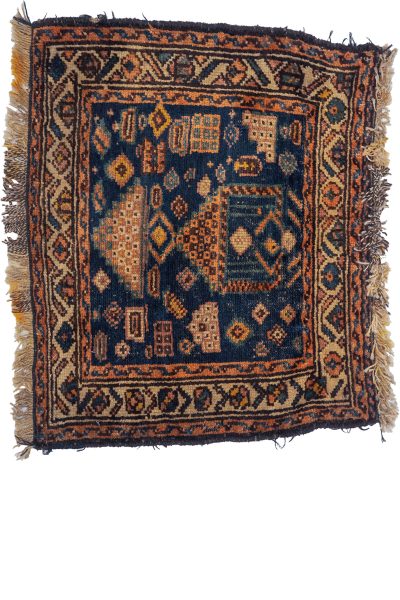
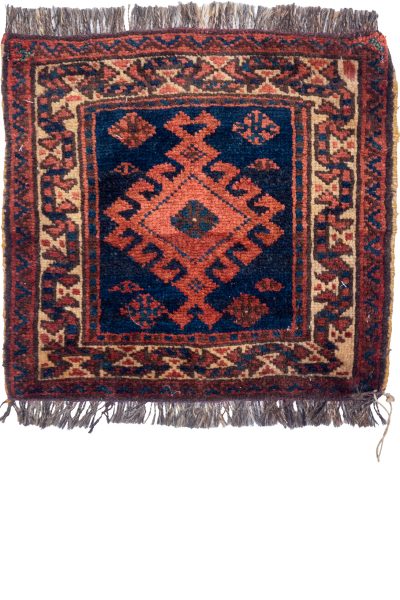
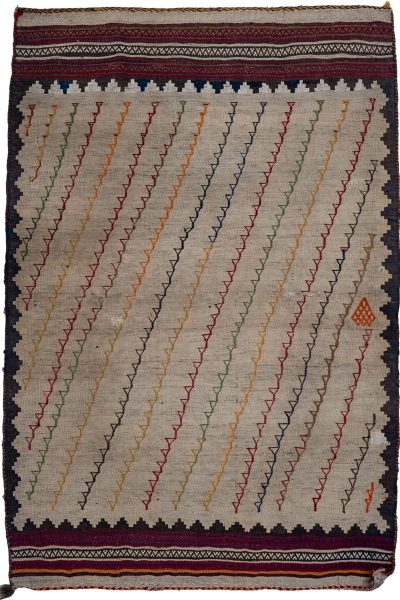
Antique storage bag face from the Qashqai Nomads of Southwest West Asia.
Indian Garous Design is a small village near to Heriz in the Azerbaijan area of Northwest West Asia, one of the most prolific weaving areas. Qarajeh is best known for its production of runners and large carpets, but it is occasionally possible to find smaller weaving production in this area.
Carpets are woven on both workshop and cottage industry basis. Although in a village such as Qarajeh it is more typical that a lady working from home, as part of a cottage industry weaves the carpets.
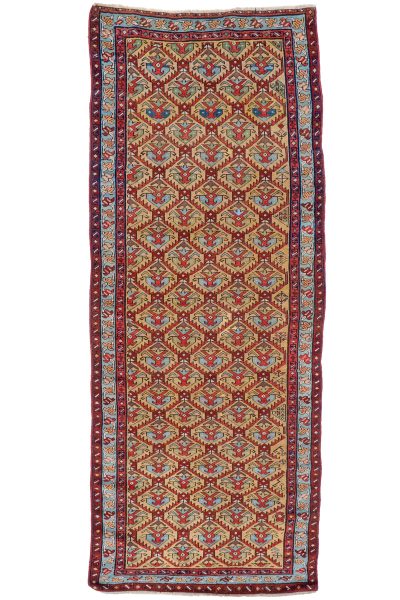
Hooked hexagons or squares are a characteristic of carpets woven in this village. Other typical designs include the use of simple, angular vines, and strong central medallions. Each rug has its own unique charm and will add warmth and comfort to any home. This particular Karajar runner is preloved but well looked after. The deep reds, forest greens, pinks and ivory are still in a very good condition and have a lovely sheen to them still.
Contemporary Rug is a small village near to Heriz in the Azerbaijan area of Northwest West Asia, one of the most prolific weaving areas. Qarajeh is best known for its production of runners and large carpets, but it is occasionally possible to find smaller weaving production in this area.
Carpets are woven on both workshop and cottage industry basis. Although in a village such as Qarajeh it is more typical that a lady working from home, as part of a cottage industry weaves the carpets.
Hooked hexagons or squares are a characteristic of carpets woven in this village. Other typical designs include the use of simple, angular vines, and strong central medallions. Each rug has its own unique charm and will add warmth and comfort to any home. This particular Karajar runner is preloved but well looked after. The deep reds, forest greens, pinks and ivory are still in a very good condition and have a lovely sheen to them still.
Dashmalti Rug is a small village near to Heriz in the Azerbaijan area of Northwest West Asia, one of the most prolific weaving areas. Qarajeh is best known for its production of runners and large carpets, but it is occasionally possible to find smaller weaving production in this area.
Carpets are woven on both workshop and cottage industry basis. Although in a village such as Qarajeh it is more typical that a lady working from home, as part of a cottage industry weaves the carpets.
Hooked hexagons or squares are a characteristic of carpets woven in this village. Other typical designs include the use of simple, angular vines, and strong central medallions. Each rug has its own unique charm and will add warmth and comfort to any home.
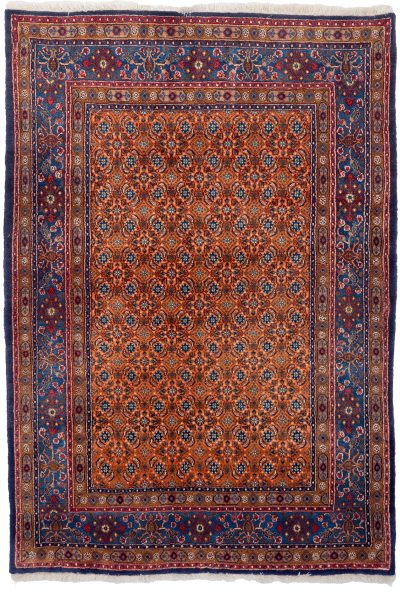
Moud is a small village near to Heriz in the Azerbaijan area of Northwest West Asia, one of the most prolific weaving areas. Qarajeh is best known for its production of runners and large carpets, but it is occasionally possible to find smaller weaving production in this area. Carpets are woven on both workshop and cottage industry basis. Although in a village such as Qarajeh it is more typical that a lady working from home, as part of a cottage industry weaves the carpets.
Hooked hexagons or squares are a characteristic of carpets woven in this village. Other typical designs include the use of simple, angular vines, and strong central medallions. Each rug has its own unique charm and will add warmth and comfort to any home.
This particular Karajar runner is preloved but well looked after. The deep reds, forest greens, pinks and ivory are still in a very good condition and have a lovely sheen to them still.
c. 1900
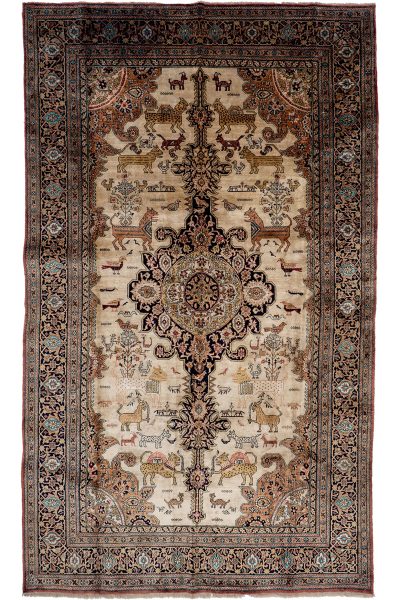
Kashan is a city in the North of central West Asia and is famous for weaving some of the best quality carpets being produced. They are exceptionally hard wearing and highly decorative. These elegant rugs are constructed on a cotton foundation with a woollen pile, sometimes having accents of silk or woven entirely with silk.
Kashan rugs have been crafted since the 16th and 17th century, during the Safavid dynasty, with many scholars believing that some of the smaller silk designs date back to the early 16th century. Taking inspiration from the architects and artists of the period.
Many Kashan’s are distinctive with their traditional floral designs with deep reds and blues in the centre panel and border. They can also have only small accents of red and a main ground of mostly ivory and navy, making them similar to a Nain but woven in the city of Kashan. Depending on their size and colour they can work very well in both a bedroom as well as a hallway or living room for example.
Construction: woven on cotton warps using hand spun vegetable dyed wool.
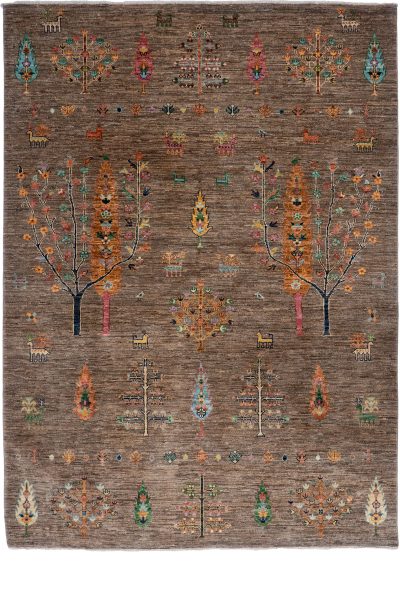
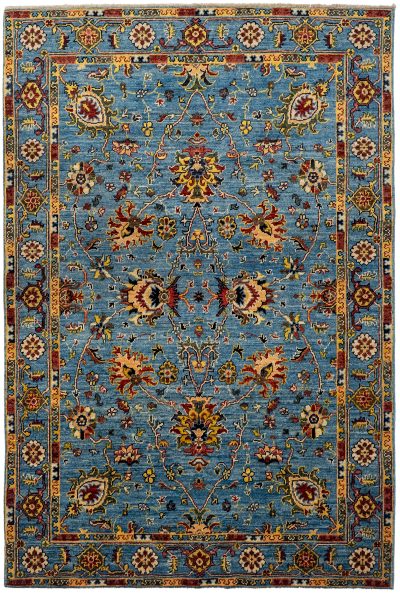
This is a modern twist on an old design originally woven in the Caucasian mountains. Today these rugs are woven by Afghan weavers in North West Pakistan. The excellent quality of the hand spun wool and the use of traditional designs give these rugs a look which would look great in both modern and traditional homes.
Construction: woven on cotton warps using hand spun vegetable dyed wool.
This is a modern twist on an old design originally woven in the Caucasian mountains. Today these rugs are woven by Afghan weavers in North West Pakistan. The excellent quality of the hand spun wool and the use of traditional designs give these rugs a look which would look great in both modern and traditional homes.
Antique Fereghan Rug is situated in mountainous country within an important weaving area in North West West Asia. The carpets taking the name of Heriz are woven in the villages within a 30 mile radius of the town by the same name. Many different qualities and variations on a similar design are produced. The typical Heriz carpet has a strictly rectilinear medallion design that has changed little over many decades; older rugs have madder grounds and medallions mostly of indigo, today these colours are still evident but with some additions of light blue, medium green, terracotta and warm yellows. Heriz carpets have a foundation of cotton warps and wefts, a thick and long pile of excellent wool, thus producing hard-wearing durable carpets.
Construction. Cotton warp, wool pile and cotton weft.
This carpet has a beautiful if slightly quirky design. The strong bold central medallion typical of Heriz carpets is slightly off centre emphasising the joy of hand made carpets. The colours are superb with all the rich colours typical of Heriz carpets. Full of character.
Najafabad Rug Najafabad Rug is situated in mountainous country within an important weaving area in North West West Asia. The carpets taking the name of...
Heriz is situated in mountainous country within an important weaving area in North West West Asia. The carpets taking the name of Heriz are woven in the villages within a 30 mile radius of the town by the same name. Many different qualities and variations on a similar design are produced. The typical Heriz carpet has a strictly rectilinear medallion design that has changed little over many decades; older rugs have madder grounds and medallions mostly of indigo, today these colours are still evident but with some additions of light blue, medium green, terracotta and warm yellows. Heriz carpets have a foundation of cotton warps and wefts, a thick and long pile of excellent wool, thus producing hard-wearing durable carpets.
The modern production of Kazak rugs and carpets is largely woven by Afghan refugee weavers in the Pakistan border region. These rugs and carpets are based on traditional Caucasian designs and woven with good quality wool yarns, much of which has been dyed using natural vegetable dyes thus adding to their vibrant and dramatic appearance
The modern production of Kazak rugs and carpets is woven by Afghan weavers. These rugs and carpets are based on traditional Caucasian designs and woven with good quality wool yarns, much of which has been dyed using natural vegetable dyes thus adding to their vibrant and dramatic appearance.
Green and red with a geometric design with strong colours. They are woven by skilled weavers in Afghanistan and are highly decorative Afghan Yakash Kazak Rug
The modern production of Kazak rugs and carpets is woven by Afghan weavers. These rugs and carpets are based on traditional Caucasian designs and woven with good quality wool yarns, much of which has been dyed using natural vegetable dyes thus adding to their vibrant and dramatic appearance.
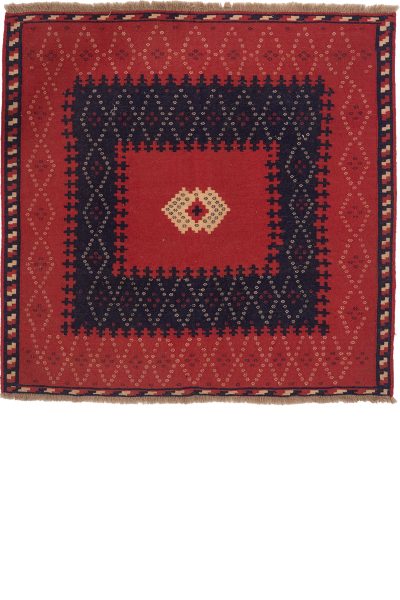
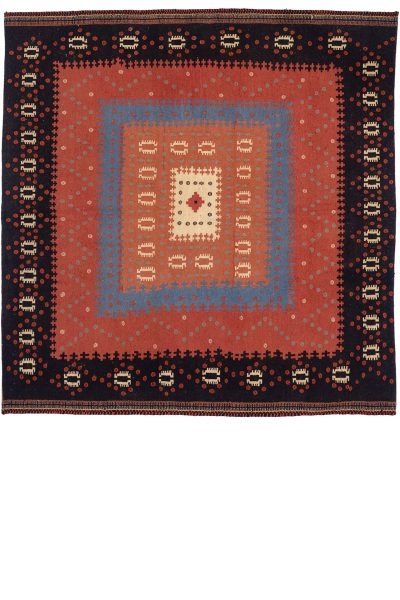
All of our Handmade Afghan have been chosen for their beautiful vibrant colours whilst being very practical in the home. They are all made from 100% vegetable dyed wool and have the added benefit of being fully reversible, the beautiful coloured rugs are great for brightening up any space. The term kelim is used to describe these stunning flatweave rugs where the wool is wrapped around the warps as opposed to being knotted onto the warps. These originating in Afghanistan are woven in very traditional designs that are passed down through the generations of the weavers.
Joshagan Rug Joshagan Rug is situated in mountainous country within an important weaving area in North West West Asia. The carpets taking the name of...
Made by the Shekary Family
Kashan is a city in the North of central West Asia and is famous for weaving some of the best quality carpets being produced. They are exceptionally hard wearing and highly decorative. These elegant rugs are constructed on a cotton foundation with a woollen pile, sometimes having accents of silk or woven entirely with silk.
Kashan rugs have been crafted since the 16th and 17th century, during the Safavid dynasty, with many scholars believing that some of the smaller silk designs date back to the early 16th century. Taking inspiration from the architects and artists of the period.
Many Kashan’s are distinctive with their traditional floral designs with deep reds and blues in the centre panel and border. They can also have only small accents of red and a main ground of mostly ivory and navy, making them similar to a Nain but woven in the city of Kashan. Depending on their size and colour they can work very well in both a bedroom as well as a hallway or living room for example.
Joshagan Rug Joshagan Rug is situated in mountainous country within an important weaving area in North West West Asia. The carpets taking the name of...