
A beautiful range of runners ...
In stock
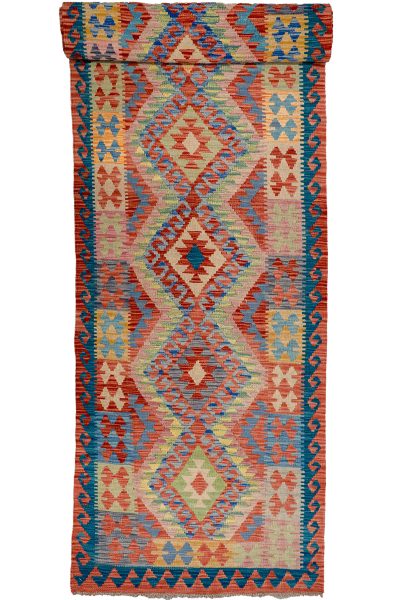
Afghan Kilim
Size: 2.78m x 0.73m (9'1 x 2'5) £180.00
All of our Afghan kilims have been chosen for their beautiful vibrant colours whilst being very practical in the home. They are all made from 100% vegetable dyed wool and have the added benefit of being fully reversible. The term kilim is used to describe these stunning flatweave rugs where the wool is wrapped around the warps as opposed to being knotted onto the warps. These originating in Afghanistan are woven in very traditional designs that are passed down through the generations of the weavers.
We would recommend using underlay under our Kilim rugs.
Add to basket
In stock
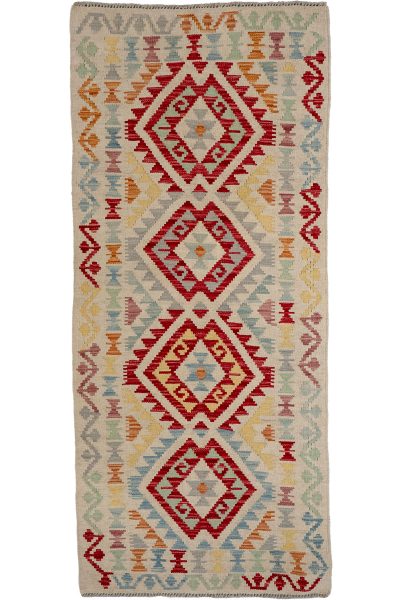
Afghan Kilim
Size: 1.85m x 0.74m (6'0 x 2'5) £120.00
All of our Afghan kilims have been chosen for their beautiful vibrant colours whilst being very practical in the home. They are all made from 100% vegetable dyed wool and have the added benefit of being fully reversible. The term kilim is used to describe these stunning flatweave rugs where the wool is wrapped around the warps as opposed to being knotted onto the warps. These originating in Afghanistan are woven in very traditional designs that are passed down through the generations of the weavers.
We would recommend using underlay under our Kilim rugs.
Add to basket
In stock
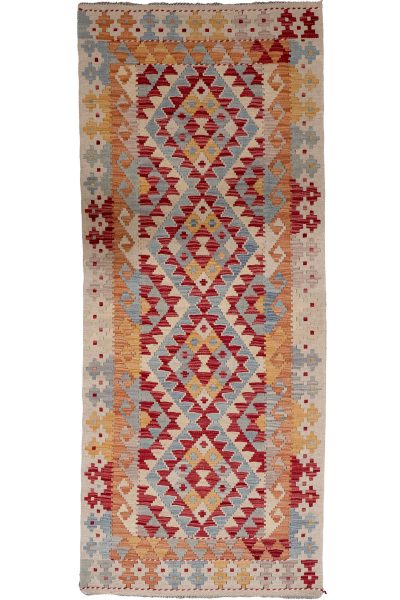
Afghan Kilim
Size: 1.89m x 0.76m (6'2 x 2'6) £125.00
All of our Afghan kilims have been chosen for their beautiful vibrant colours whilst being very practical in the home. They are all made from 100% vegetable dyed wool and have the added benefit of being fully reversible. The term kilim is used to describe these stunning flatweave rugs where the wool is wrapped around the warps as opposed to being knotted onto the warps. These originating in Afghanistan are woven in very traditional designs that are passed down through the generations of the weavers.
We would recommend using underlay under our Kilim rugs.
Add to basket
In stock
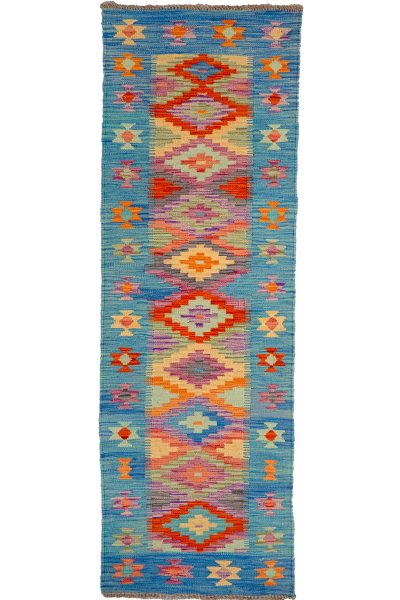
Shirvan Design Kilim
Size: 1.99m x 0.60m (6'6 x 2'0) £125.00
All of our Afghan kilims have been chosen for their beautiful vibrant colours whilst being very practical in the home. They are all made from 100% vegetable dyed wool and have the added benefit of being fully reversible. The term kilim is used to describe these stunning flatweave rugs where the wool is wrapped around the warps as opposed to being knotted onto the warps. These originating in Afghanistan are woven in very traditional designs that are passed down through the generations of the weavers.
We would recommend using underlay under our Kilim rugs.
Add to basket
In stock
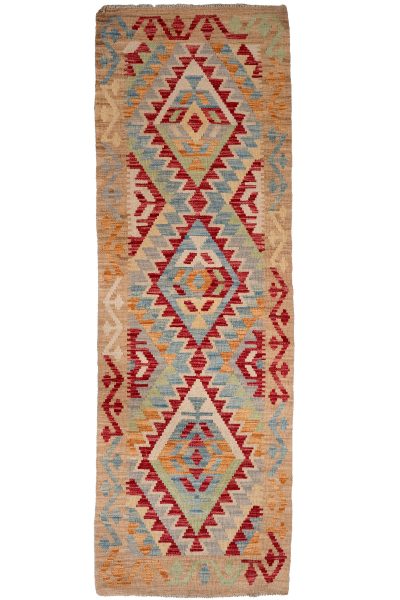
Afghan Kilim
Size: 1.94m x 0.64m (6'5 x 2'1) £110.00
All of our Afghan kilims have been chosen for their beautiful vibrant colours whilst being very practical in the home. They are all made from 100% vegetable dyed wool and have the added benefit of being fully reversible. The term kilim is used to describe these stunning flatweave rugs where the wool is wrapped around the warps as opposed to being knotted onto the warps. These originating in Afghanistan are woven in very traditional designs that are passed down through the generations of the weavers.
We would recommend using underlay under our Kilim rugs.
Add to basket
In stock
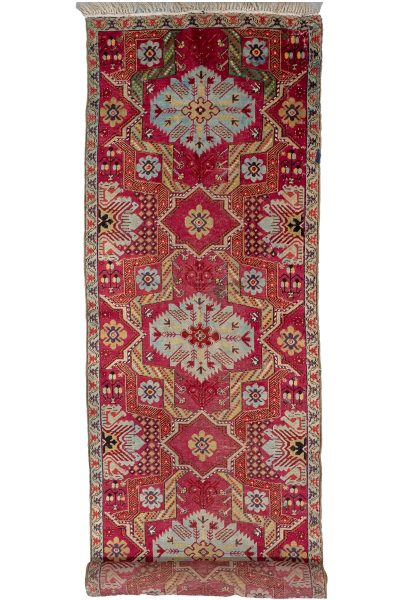
Caucasian Runner c.1890
Size: 4.00m x 1.00m (13'1 x 3'3) £480.00
Caucasian Runner c.1890
Sold as seen with some past repairs
Add to basket
In stock
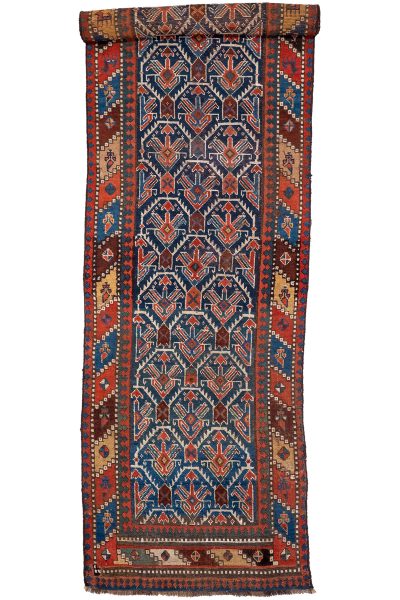
North West Antique Kurdish Runner
Size: 3.65m x 0.88m (12'0 x 2'11) £1,500.00
https://youtube.com/shorts/Av_z6rheKrY?feature=share
Add to basket
In stock
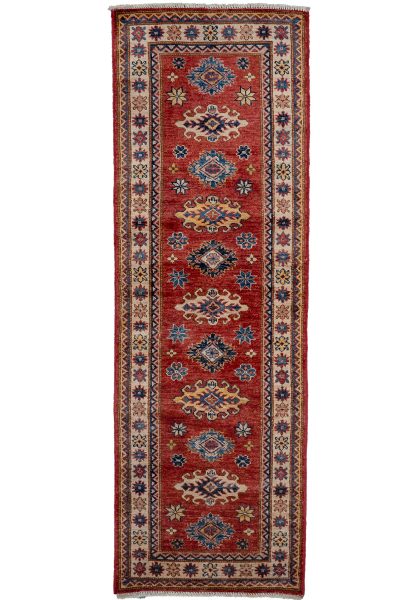
Kazak Runner
Size: 1.85m x 0.60m (6'1 x 2'0) £350.00
Kazak Runner Tribal Khamseh c.1980 collection has been hand woven in Afghanistan by the nomadic Uzbek and Turkmen tribe. The designs used are mainly inspired...
Add to basket
In stock
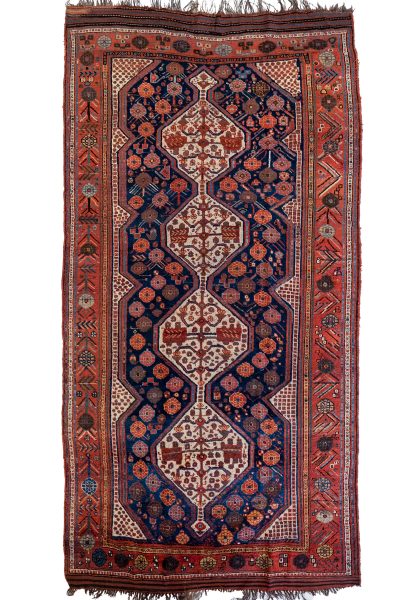
Khamseh Kelley c.1880
Size: 3.15m x 1.60m (10'4 x 5'3) £2,900.00
Khomseh Kelley c.1880 Tribal Khamseh c.1980 collection has been hand woven in Afghanistan by the nomadic Uzbek and Turkmen tribe. The designs used are mainly...
Add to basket
In stock
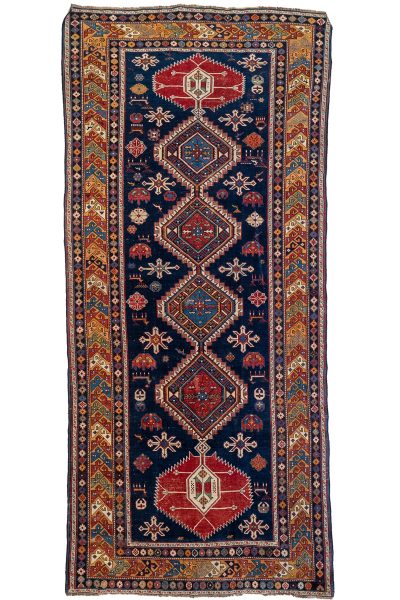
Antique Shirvan Kelley c.1910
Size: 3.08m x 1.36m (10'1 x 4'5) £2,500.00
Antique Shirvan Kelley Tribal Khamseh c.1980 collection has been hand woven in Afghanistan by the nomadic Uzbek and Turkmen tribe. The designs used are mainly...
Add to basket
In stock
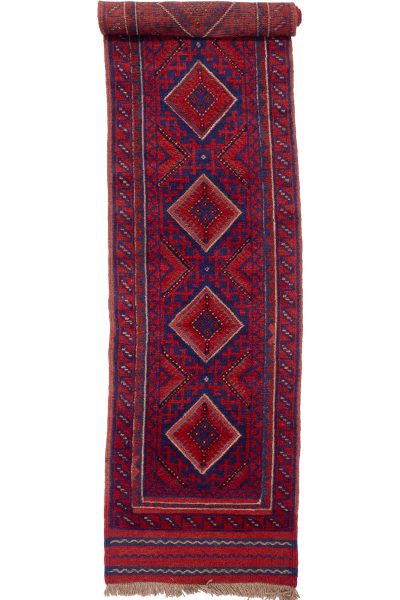
Mushwani Runner
Size: 2.64m x 0.61m (8'7 x 2'0) £260.00
The Afghan Mushwani rugs are unique textiles which are characterised by their intricate geometric patterns and dark colours. These rugs are a blend of both flatweave kelim and hand knotted techniques which create a wonderful contrast in pile heights. They are made from wool using natural vegetable dyes which result in rich tones of deep reds, dark blues and browns. Mushwani rugs make great floor coverings but also serve as symbols of cultural heritage which reflect the craftsmanship of the Mushwani tribes.
Add to basket
In stock
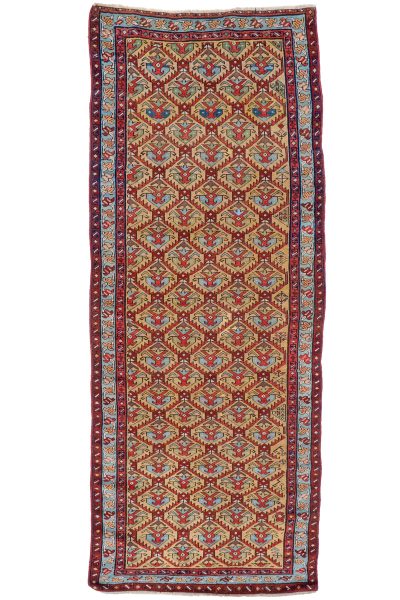
Caucassian Runner c.1900
Size: 2.50m x 0.94m (8'3 x 3'1) £1,500.00
Caucassian Runner c.1900 Tribal Khamseh c.1980 collection has been hand woven in Afghanistan by the nomadic Uzbek and Turkmen tribe. The designs used are mainly...
Add to basket
In stock

Afghan Kelim Runner
Size: 3.94m x 0.83m (12'11 x 2'9) £375.00
All of our Afghan kilims have been chosen for their beautiful vibrant colours whilst being very practical in the home. They are all made from 100% vegetable dyed wool and have the added benefit of being fully reversible. The term kilim is used to describe these stunning flatweave rugs where the wool is wrapped around the warps as opposed to being knotted onto the warps. These originating in Afghanistan are woven in very traditional designs that are passed down through the generations of the weavers.
We would recommend using underlay under our Kilim rugs.
Add to basket
In stock
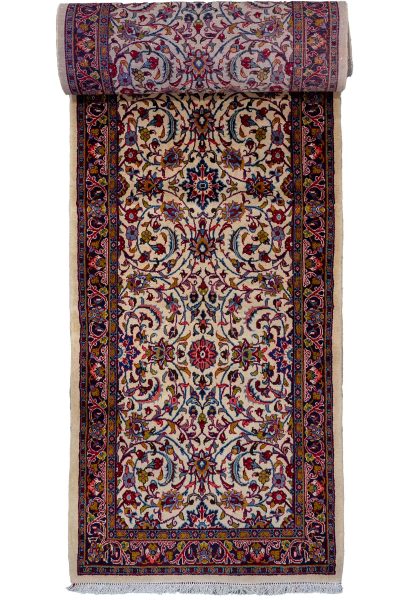
Sarouk Runner
Size: 3.00m x 0.90m (6'10 x 2'11) £790.00
Sarouk Rug The modern production of Kazak rugs and carpets is woven by Afghan weavers. These rugs and carpets are based on traditional Caucasian designs...
Add to basket
In stock

Kelim Runner
Size: 2.50m x 0.80m (8'3 x 2'8) £210.00
All of our kelims have been chosen for their beautiful vibrant colours whilst being very practical in the home. They are all made from 100% vegetable dyed wool and have the added benefit of being fully reversible, the beautiful coloured rugs are great for brightening up any space. The term kelim is used to describe these stunning flatweave rugs where the wool is wrapped around the warps as opposed to being knotted onto the warps. These originating in Afghanistan are woven in very traditional designs that are passed down through the generations of the weavers.
We would recommend using underlay under our Kelim rugs.
Add to basket
In stock

Gabbeh Runner
Size: 2.07m x 0.81m (6'9 x 2'8) £780.00
Gabbeh (from the Persian language farsi; raw, natural, uncut) represents a rough and primitive carpet with patterns mostly made by Qashghai nomads in the southwest of West Asia. They are manufactured using handspun wool, both in the pile and warp, and the yarns are dyed using plant dyes. The carpets are much thicker than other Persian carpets. The patterns of the carpet are of a simple type with only a few elements of decorative, mostly rectangular objects containing animals.
Add to basket
In stock
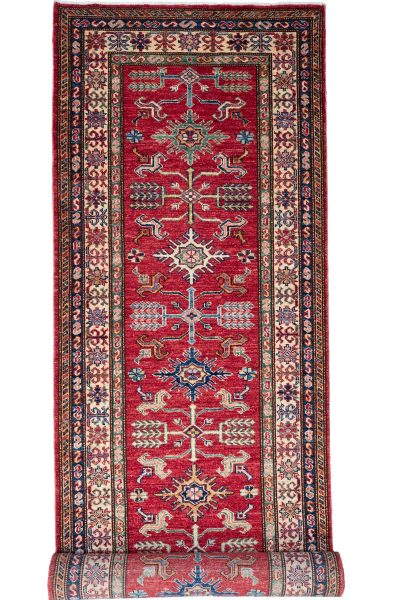
Fine Shirvan Runner
Size: 2.85m x 0.79m (9'5x 2'7) £950.00
This vibrant modern Shirvan style runner has been hand woven by Afghan tribal people in Pakistan. It is based on the traditional Caucasian designs and woven with good quality wool yarns, using natural vegetable dyes. It is woven on a cotton foundation and will add a wonderful splash of colour in any hallway or corridor. Each of our handmade rugs are unique pieces and this new Shirvan is a fine example of what is being woven by Afghan tribes today.
Add to basket
In stock
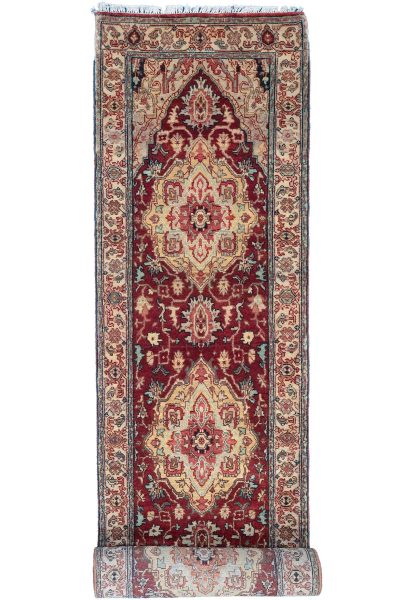
Indo Heriz Rug
Size: 2.82m x 0.72m (9'3 x 2'4) £790.00
Heriz Rug Heriz is situated in mountainous country within an important weaving area in North West West Asia. The carpets taking the name of Heriz...
Add to basket
In stock

Karajar Rug
Size: 4.85m x 0.75m (15'11 x 2'6) £1,200.00
Karajar
Qarajeh is a small village near to Heriz in the Azerbaijan area of Northwest West Asia, one of the most prolific weaving areas. Qarajeh is best known for its production of runners and large carpets, but it is occasionally possible to find smaller weaving production in this area.
Carpets are woven on both workshop and cottage industry basis. Although in a village such as Qarajeh it is more typical that a lady working from home, as part of a cottage industry weaves the carpets.
Hooked hexagons or squares are a characteristic of carpets woven in this village. Other typical designs include the use of simple, angular vines, and strong central medallions. Each rug has its own unique charm and will add warmth and comfort to any home.
Add to basket
In stock
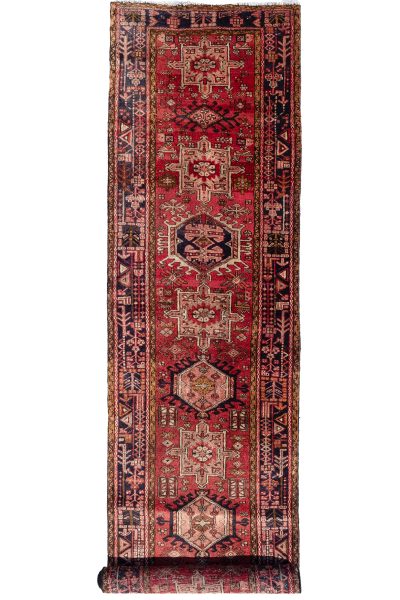
Karajar Rug
Size: 4.37m x 1.04m (14'4 x 3'4) £950.00
Karajar
Qarajeh is a small village near to Heriz in the Azerbaijan area of Northwest West Asia, one of the most prolific weaving areas. Qarajeh is best known for its production of runners and large carpets, but it is occasionally possible to find smaller weaving production in this area.
Carpets are woven on both workshop and cottage industry basis. Although in a village such as Qarajeh it is more typical that a lady working from home, as part of a cottage industry weaves the carpets.
Hooked hexagons or squares are a characteristic of carpets woven in this village. Other typical designs include the use of simple, angular vines, and strong central medallions. Each rug has its own unique charm and will add warmth and comfort to any home.
Add to basket
In stock

Kazak
Size: 2.80m x 1.50m (9'2 x 4'11) £490.00
This vibrant Kazak has been hand woven by Afghan tribal people in Pakistan. It is based on the traditional Caucasian designs and woven with good quality wool yarns, using natural vegetable dyes. It has a cotton foundation and could work very well under a dining table, in a living room or an open plan kitchen for a pop of colour. Each of our handmade rugs are unique pieces and this new Kazak is a fine example of what is being woven by Afghan tribes today.
Add to basket
In stock

Hamadan Runner
Size: 3.77m x 1.03m (12'4 x 3'4) £895.00
Hamadan is a city and provincial capital in Northwest West Asia and is a main collection and shipping centre for this area. Rugs are woven in a variety of sizes usually on a cotton foundation. The designs tend to be diamonds and hexagons and quite simple in their appearance.
Add to basket
In stock

Kashan Rug
Size: 3.82m x 1.02m (12'6 x 3'4) £790.00
50-80 years old
Kashan is a city in the North of central West Asia and is famous for weaving some of the best quality carpets being produced. They are exceptionally hard wearing and highly decorative. These elegant rugs are constructed on a cotton foundation with a woollen pile, sometimes having accents of silk or woven entirely with silk.
Kashan rugs have been crafted since the 16th and 17th century, during the Safavid dynasty, with many scholars believing that some of the smaller silk designs date back to the early 16th century. Taking inspiration from the architects and artists of the period.
Many Kashan’s are distinctive with their traditional floral designs with deep reds and blues in the centre panel and border. They can also have only small accents of red and a main ground of mostly ivory and navy, making them similar to a Nain but woven in the city of Kashan. Depending on their size and colour they can work very well in both a bedroom as well as a hallway or living room for example.
Add to basket
In stock

Sultanabad Rug
Size: 3.14m x 0.84m (10'4 x 2'9) £790.00
Woven on cotton warps using hand spun vegetable dyed wool.
Add to basket
In stock

Kazak c.1920
Size: 2.77m x 1.42m (9'1 x 4'8) £3,200.00
Kazak Rug c.1920
An original Kazak rug made in a cottage industry. For its age it is in superb condition, full pile with slight corrosion in the black dyed woven wool, which is typical of rugs of this age.
Add to basket
In stock
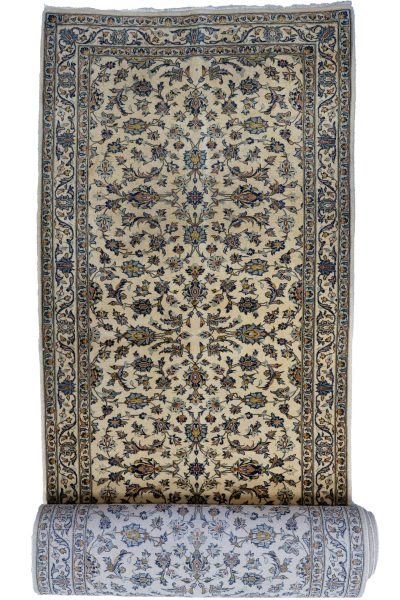
Kashan Rug
Size: 4.10m x 1.10m (13'5 x 3'7) £1,200.00
The Kashan Rug from The Rug and Carpet Studio is a classic example of fine Persian craftsmanship, originating from one of Iran’s most celebrated carpet-weaving cities. Renowned for their extraordinary detail and dense knotting, traditional Kashan rugs are hand-knotted from high-quality wool on a sturdy cotton foundation, giving them exceptional durability and a luxurious feel underfoot. Design-wise, Kashans are famous for their ornate central medallions set against a field of swirling floral tracery, arabesques, and intricate corner spandrels, typically framed by a rich, multi-tiered border in classic shades of deep crimson, ivory, and indigo blue.
Whether positioned as a statement centerpiece in a formal lounge, dining room, or study, this rug brings timeless elegance, rich cultural heritage, and enduring quality to any interior setting.
Add to basket
In stock

Luri Kelley
Size: 2.82 x 1.50m (9'3 x 4'11) £2,200.00
Antique Luri runner made by the Luri people form South west West Asia, Circa 1910.
Wool foundation and wool pile, with a strong geometric that is traditionally from the Luri people.
Add to basket